
The BYD Scam? I Warned This Was Coming and Now 1,265 Australian Buyers Have Been Offered Refunds
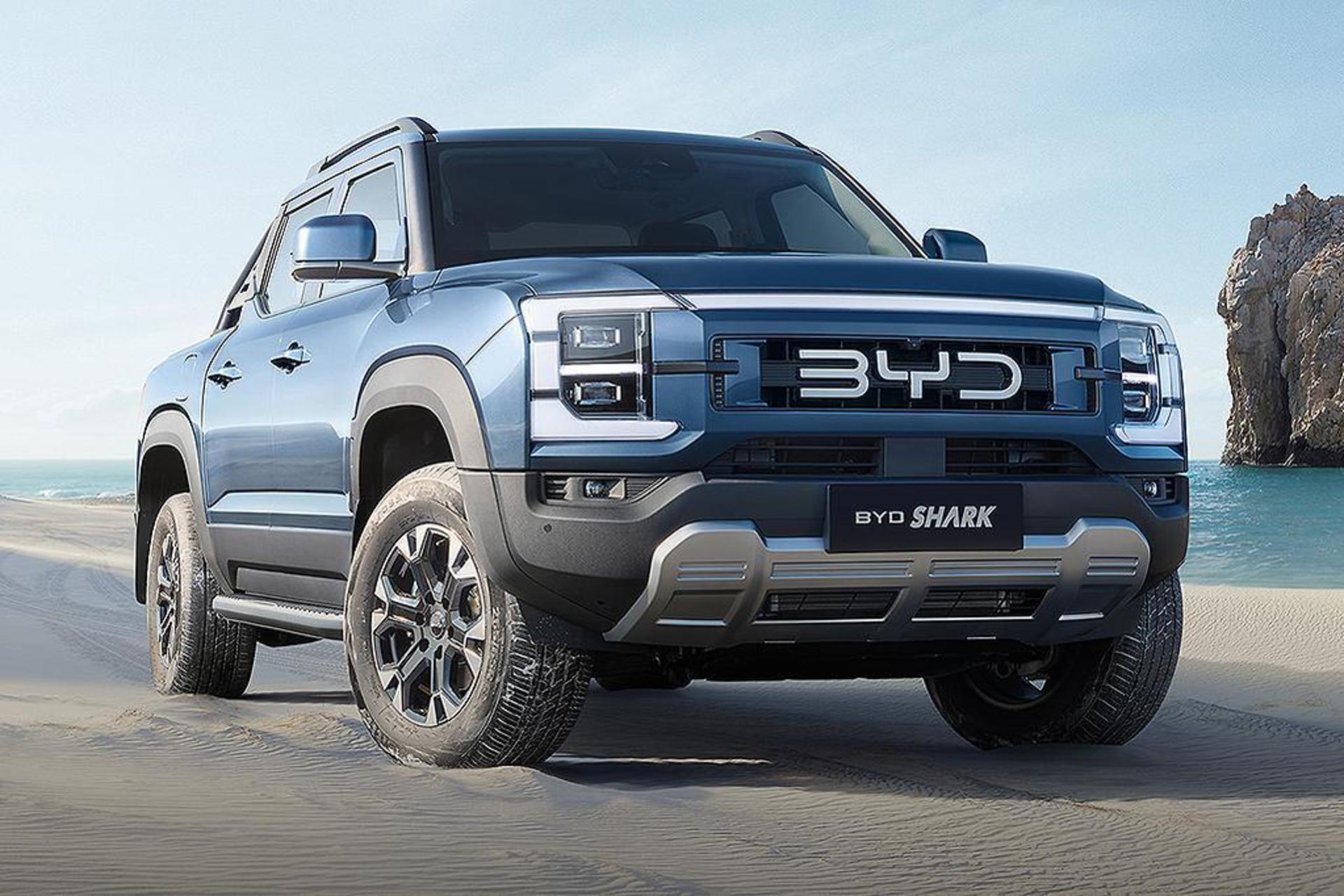
A few weeks ago, I sat behind a microphone and said something that probably sounded a little dramatic.
I said Australia was creating the perfect environment for electric vehicle manufacturers, particularly BYD, to flood the country with more vehicles than the market could reasonably absorb.
I said the Federal Government's New Vehicle Efficiency Standard was creating a financial incentive linked to the supply of low and zero emission vehicles into the Australian market, rather than simply rewarding vehicles once an Australian consumer actually buys one.
And I made a prediction.
We are going to end up with enormous volumes of ageing EV stock sitting in Australia.
Eventually, somebody is going to buy what they believe is a current year new car, only to discover the vehicle was built a year, or possibly even two years, earlier.
Well, here we are.
1,265 customers. Wrong build year.
BYD has now admitted that 1,265 Australian customers received 2025-built vehicles when they believed they had purchased 2026 vehicles.
Initially, affected customers were reportedly offered $1,100, effectively the dealer delivery charge, as compensation.
After customers complained and the ABC started asking questions, BYD announced it would offer affected customers a full refund.
BYD says the expanded remedy was already under discussion and was not a reaction to the ABC's involvement.
BYD's explanation?
An "administrative error".
According to the company, the date the vehicles left the factory was mistakenly used instead of the date the cars were manufactured.
BYD maintains there was no deceit and says the affected vehicles are materially the same in terms of performance, warranty and Australian compliance.
I'm going to say something unpopular.
I don't buy the idea that the bigger issue here is "just a build date".
And I certainly don't believe Australians should shrug their shoulders and move on.
In the car industry, a build date matters
I've worked in and around vehicle sales for a long time now.
I now operate a vehicle brokerage business nationally.
Every week we deal with valuations, buyers, sellers, finance companies and the brutal reality of vehicle depreciation.
So let me explain something from the real world.
When you go to sell your car, buyers don't just ask what year you first registered it.
They look at the VIN.
They look at the build date.
They look at the compliance information.
They look at whether a vehicle is an early build, a late build, a previous model, a facelift or superseded stock.
A 2025-built vehicle does not magically become a 2026-built vehicle because somebody typed 2026 on a contract.
BYD itself has now acknowledged the mistake could affect resale value.
The Insurance Council of Australia also advised affected owners to correct their vehicle information with their insurer, although it said a one year difference would be unlikely to have a significant effect on insurance pricing.
From a resale perspective, however, I completely understand why these customers are pissed off.
They made a purchase decision based on a description of the vehicle.
The car delivered did not match that description.
That's not me interpreting consumer law.
The ACCC's own position is that Australian Consumer Law includes a guarantee that products match their description and prohibits misleading or deceptive conduct and false representations about a product's style or model.
Whether BYD deliberately misled anybody is a separate question.
BYD says it didn't.
But intent doesn't change the build date stamped into a vehicle's history.
This is where my earlier warning becomes important
The mistake involving these 1,265 customers cannot, based on the evidence currently available, be directly blamed on Australia's emissions scheme.
Let me make that very clear.
I am not saying the Federal Government told BYD to describe 2025 cars as 2026 cars.
It didn't.
What I am saying is that we need to look at the bigger picture.
Australia's New Vehicle Efficiency Standard, the NVES, creates emissions targets across a manufacturer's supplied vehicle fleet.
The official NVES Regulator says the 2025 performance period covered vehicles entered on the Register of Approved Vehicles, or RAV, between 1 July and 31 December 2025.
It recorded 620,947 covered vehicles and generated more than 17 million NVES units across manufacturers that beat their emissions targets.
This is the important bit.
The regulator's own worked examples calculate emissions performance using the quantity of vehicles imported and entered onto the RAV.
Where a manufacturer's fleet beats its target, units can be issued, traded commercially to another regulated entity or held for up to three years.
The vehicle doesn't first have to find a family in Brisbane, a tradie in Melbourne or a commuter in Sydney.
That is the structural issue I was talking about on the podcast.
And I'm hardly the only person who has noticed it.
BYD imported almost 13,000 more cars than it sold
By the end of September 2025, BYD had reportedly imported 50,918 vehicles into Australia while recording 37,923 sales over the same period.
That's a difference of almost 13,000 vehicles.
For comparison, GWM reportedly imported 41,315 and sold 39,343.
MG imported 32,620 and sold 34,773.
At one point, reports emerged of large volumes of BYD vehicles being stored in unusual locations, including a temporarily closed water park south of Sydney.
BYD's explanation was that it had built inventory in anticipation of rapid growth in 2026 and wanted Australian customers to be able to take delivery quickly.
And let's be fair.
BYD is growing extraordinarily quickly.
In May 2026 it recorded 8,211 Australian sales and ranked second overall behind Toyota, with sales reportedly up more than 150 per cent year on year.
I'm not suggesting nobody is buying these cars.
Clearly, they are.
My question is different.
Why did Australia create an emissions system that can recognise a vehicle before the retail market has actually absorbed it?
Because when you financially reward supply ahead of consumer sale, you create the possibility of a completely predictable commercial behaviour.
Bring the cars in.
Lots of them.
BYD generated more than 6.2 million NVES units
The first 2025 emissions data makes the scale of this fascinating.
Analysis of the NVES interim data found BYD accrued approximately 6.28 million NVES units from 39,603 vehicle imports during the initial performance period.
BDO modelling presented to the Australian Automotive Dealer Association estimated the potential commercial advantage of selling those credits at somewhere between $562 and $972 per BYD vehicle imported, depending on how the credit market develops.
Let's be precise here.
That doesn't mean the Australian Government wrote BYD a cheque for $972 every time a car came off a ship.
These units operate through a market mechanism.
They can be retained or traded and their actual commercial value will depend on supply, demand and agreements between manufacturers.
But don't miss the point.
There is potentially real commercial value attached to supplying ultra-low-emission vehicles into the Australian fleet.
Meanwhile, manufacturers whose fleets exceed their emissions targets can accrue liabilities and may need to earn units in future periods, acquire units from another entity or ultimately face penalties.
So ask yourself a very simple question.
If you're BYD, a manufacturer heavily weighted towards EVs and plug-in hybrids, what behaviour does the system encourage?
Does it encourage you to carefully match every imported vehicle to a confirmed retail buyer?
Or does it encourage you to supply Australia aggressively?
I think we all know the answer.
And then the calendar keeps moving
This was my prediction.
You can import 10,000 cars today.
You can import another 10,000 tomorrow.
But time doesn't stop because the vehicle hasn't sold.
A December 2025-built car remains a 2025-built car in July 2026.
It remains a 2025-built car in January 2027.
You can call it new.
You can leave the plastic on the seats.
You can put seven kilometres on the odometer.
You can wash it every Sunday and sing it a lullaby.
It's still a 2025-built car.
And when the market eventually develops a stock-age problem, manufacturers and dealers have limited options.
Discount the stock.
Apply factory bonuses.
Offer cheap finance.
Pre-register vehicles.
Run demonstrator campaigns.
Or find increasingly creative ways to move ageing inventory.
This is not specifically a BYD problem.
Old-stock management has existed in the automotive industry forever.
What is different is the potential scale.
Australia is experiencing an extraordinary influx of new Chinese automotive brands and models while government policy is simultaneously applying emissions pressure to traditional manufacturers.
The 2025 NVES results show 40 regulated entities beat their targets and collectively generated 17.2 million units, leaving a potential net surplus of 15.9 million units after liabilities were accounted for.
We have effectively created an emissions economy inside the new-car industry.
My concern is that the Australian consumer may ultimately become the shock absorber for excess inventory.
BYD says it was an error. Fine. But consumers should start checking.
I accept BYD's public position.
They say this was an administrative error.
They say there was no deceit.
Unless evidence emerges proving otherwise, that's the company's explanation and it should be reported fairly.
But 1,265 affected customers is not one salesman clicking the wrong dropdown box on a Tuesday afternoon.
It's a large scale failure of process.
More importantly, it has exposed something Australian buyers rarely think about.
The year written on the windscreen is not necessarily the year the vehicle was built.
So here's my advice.
Before buying a brand new vehicle, BYD or otherwise, ask for the actual build date.
Check the VIN information.
Have the build year written correctly on your contract.
Ask whether the vehicle is current production or older stock.
And when somebody tells you "it's basically the same car", ask yourself why you should pay current-year money for previous-year stock.
This isn't an anti-EV argument
Every time I criticise the EV industry, somebody inevitably says I'm anti-electric vehicle.
I'm not.
There are some brilliant EVs.
BYD itself produces vehicles with impressive technology and aggressive pricing.
Its Australian sales success is real.
My issue is with blind enthusiasm.
We are pumping billions of dollars of consumer spending into a rapidly changing automotive segment while governments manipulate market behaviour through tax policy, emissions targets and financial incentives.
Then everyone acts surprised when corporations structure their commercial behaviour around those incentives.
Companies follow money.
Toyota does it.
Ford does it.
Tesla does it.
BYD does it.
Titan would do it.
Any commercially competent organisation looks at the rules of the game and works out how to win.
My criticism isn't simply that BYD may be taking advantage of the NVES.
My criticism is that Australia designed a system where aggressively supplying vehicles can have a commercial emissions benefit before those cars have necessarily been absorbed by Australian retail customers.
Reports about excess inventory started emerging in 2025.
I looked at it and said ageing stock would become an issue.
Now 1,265 Australians have discovered they were driving 2025-built cars after believing they had purchased 2026 vehicles.
Coincidence?
Possibly.
An administrative mistake?
That's BYD's position.
But does it make me more comfortable about the huge volumes of EV inventory flowing into Australia?
Not for a second.
Because my next question is the one nobody seems to be asking yet.
What happens to all the 2025-built EVs that still haven't sold when we get deep into 2027?
That's the podcast I think we need to record next.
Matt DochertyTitan Vehicle Brokers
This article contains commentary and opinion based on publicly reported information and published NVES data. BYD has stated the build-year issue was an administrative error and that there was no deceit.
